Why Your Brain Keeps a Perfect Record of Every Loss and a Terrible One of Every Win
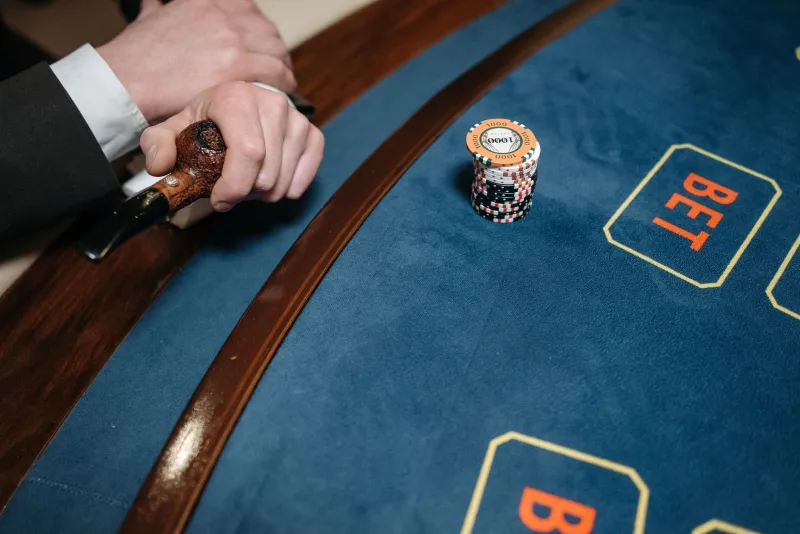
There's a particular kind of conversation that happens between Australian gamblers with remarkable consistency. It usually starts with "remember that night I lost three hundred bucks at the pokies?" — and what follows is a detailed, almost cinematic reconstruction. The time of night. What they were wearing. The specific sequence of near-misses. The exact feeling in the stomach when the balance hit zero.
Ask the same person about the night they won three hundred bucks, and watch what happens. There's a pause. A vague recollection. "Oh yeah, I did have a decent run once." The details are soft. The emotion is muted. The story is, in almost every measurable way, less real.
This asymmetry isn't unique to Australia, but it manifests here with particular intensity — and understanding why it happens is one of the most useful things a casino player can do for themselves.
The Neuroscience of the Bad Beat
Memory isn't a recording device. It's a reconstruction — a story your brain tells itself using emotional intensity as the primary filing mechanism. The stronger the emotional response at the time of an event, the more resources your brain dedicates to encoding it, and the more vividly it can be retrieved later.
Loss, in gambling, is emotionally louder than equivalent gain. This is a well-documented phenomenon called loss aversion, first described rigorously by Kahneman and Tversky but felt intuitively by anyone who's ever been up two hundred dollars and then watched it disappear. The distress of losing a sum is neurologically more powerful than the pleasure of winning the same amount — roughly twice as powerful, according to most estimates.
This means losses get filed in high-definition. Wins get filed in standard. Not because wins feel bad, but because the emotional signal isn't strong enough to trigger the same depth of encoding. Your brain is, in a very literal sense, paying more attention when things go wrong.
The Qualification Effect
There's a second layer to this that's particularly interesting. When Australians do recall wins, they tend to immediately contextualise them downward. "I won four hundred, but I'd already put in two-fifty, so it wasn't really that much." "Yeah, I had a good run, but then I gave most of it back." "I came out ahead but it took ages."
This isn't false modesty. It's a genuine cognitive pattern. Wins that aren't immediately cashed out and removed from the gambling context tend to get mentally reclassified as stake, not profit. The money you won on spin fourteen that you then used for spins fifteen through thirty doesn't feel like a win — it feels like part of a longer session that ended in a loss.
Losses don't get this treatment. Nobody says "I lost three hundred, but I'd won a hundred and fifty earlier in the session, so it was really only one-fifty." The loss is the loss. The win was already absorbed.
How Casinos Quietly Encourage This Pattern
Here's where it gets strategically interesting. The casino industry — including online platforms — has no particular incentive to correct this memory distortion. In fact, the design of most gambling products quietly reinforces it.
Consider how wins are announced. Big wins trigger visual and audio celebrations — lights, sounds, the whole theatrical production. This is partly entertainment, but it also serves a specific function: it creates a memorable moment. The win is made vivid, which should help with memory encoding. But the celebration is immediately followed by the invitation to keep playing, which means the win rarely gets to exist as a discrete, closed event. It becomes part of a continuing session, and in the player's memory, it dissolves into the overall narrative of that session — which, statistically, is more likely to end in a loss.
Small wins, meanwhile, barely register. The "win" sound plays, the balance ticks up slightly, and the next spin is already loading. These micro-wins — which are designed to maintain engagement and create the sensation of a winning streak — almost never survive in memory. What survives is the trajectory: you were up, then you weren't.
Marketing adds another layer. Casino promotions almost universally focus on wins — jackpot amounts, player stories, the possibility of transformation. This creates an aspirational memory of a win that hasn't happened yet, which sits alongside the vivid memories of actual losses in a way that feels motivating rather than cautionary. "Last time I lost, but this time could be different" is a more emotionally compelling story than the data supports.
The Poker Player's Advantage
Interestingly, experienced poker players tend to exhibit this pattern less severely than slots or sports betting players. This is worth examining.
Poker, unlike most casino games, requires active record-keeping to improve. Serious players track sessions meticulously — not just wins and losses, but decision quality, hand histories, variance over time. This external record acts as a corrective to the brain's tendency toward loss-weighted memory. When you have a spreadsheet telling you that your actual win rate over three hundred sessions is positive, your emotional memory of that one catastrophic night at the final table becomes just one data point rather than the defining truth of your gambling experience.
This is one of the genuinely transferable skills from poker strategy to broader casino play: the discipline of keeping honest records. Not to celebrate wins more loudly, but to stop losses from becoming disproportionately large in your personal narrative.
Resetting the Memory Ledger
The practical upshot of all this is both simple and surprisingly difficult to implement. If your memory is systematically overweighting losses and underweighting wins, then your intuitive sense of your gambling history is inaccurate. You might feel like you always lose when your actual record is more mixed. You might feel like a win is long overdue when there's no mathematical basis for that feeling whatsoever.
The corrective isn't to minimise losses or pretend they don't sting. It's to keep an honest external record that your brain can't revise. Set a session budget, record what you deposit and what you withdraw, and look at the actual numbers rather than the emotional impression of them.
Your brain is an extraordinary instrument. It's just not a great accountant. At Jokaroom, we'd rather you know that than find out the hard way.