Pokie Brain in a Digital World: How Online Casinos Are Built to Feel Like Your Local
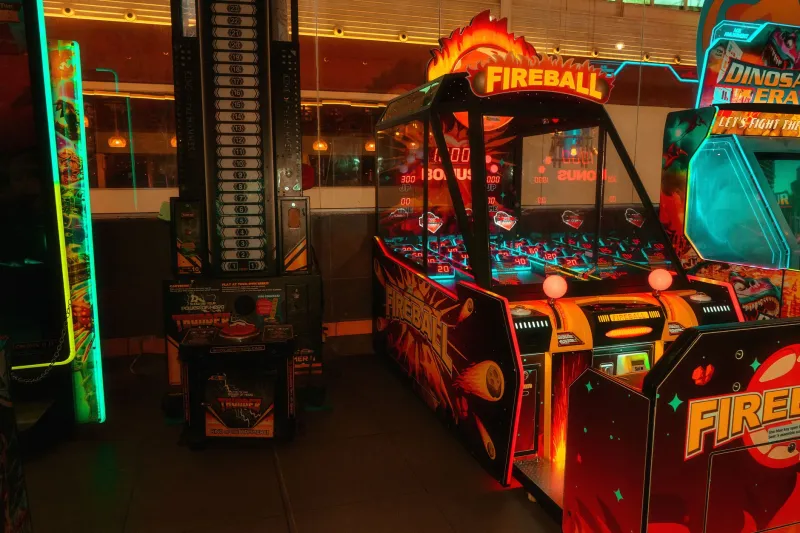
Close your eyes and picture a pokies room. Not a fancy casino floor — your local. The RSL, the pub around the corner, the club where your uncle used to disappear after Sunday lunch. You can probably hear it before you see it: the shimmer of electronic jingles, the rhythmic thunk of a spin completing, the occasional burst of celebratory noise from a machine three rows over. The lighting is specific. The chairs are a particular kind of comfortable-but-not-too-comfortable. The carpet is, for reasons nobody has ever fully explained, absolutely wild.
Now open your eyes and look at your phone. Because that experience — every sensory, psychological, and social detail of it — has been meticulously reconstructed in the online casino sitting in your pocket.
The Sound of Familiar Money
Sound design is where the connection between physical pokies and online casino platforms is most nakedly apparent. The specific frequencies used in pokie machines — the high-pitched jingle of a win, the lower, more anticipatory hum of a near-miss, the rhythmic ticking of reels in motion — aren't random. They've been refined over decades of research and iteration in physical venues, and the online casino industry has inherited that entire library.
Australian online casinos in particular lean into this heavily. The sonic vocabulary of the Aussie pub gaming room is deeply embedded in the national gambling psyche. Players who grew up watching parents or older relatives play pokies have a neurological association between those sounds and the concept of entertainment, social time, and the possibility of reward. When an online slot replicates that soundscape, it's not just setting a mood — it's activating a memory.
This is deliberate. Game developers who supply the Australian market have spoken openly (in trade publications, if not to players) about the importance of audio familiarity. The goal isn't to create something new. The goal is to create something that feels like it was always there.
Speed, Rhythm, and the Pub Heartbeat
Beyond sound, the pace of online casino games has been carefully calibrated to mirror the physical pokies experience. The average spin duration on a modern online slot is between three and five seconds — almost identical to the machine cycle time on a contemporary electronic gaming machine in an Australian venue.
This isn't a coincidence. It's a design constraint that exists because that rhythm has been proven, over decades of physical gambling research, to hit a particular psychological sweet spot. Fast enough to maintain engagement, slow enough to allow the anticipatory dopamine hit to register fully before the next cycle begins.
What's interesting — and worth sitting with — is that this rhythm was originally set by the mechanical limitations of early pokie machines. The technology has advanced enormously. Online platforms could theoretically offer instant spins. They don't. They choose not to, because the artificial delay is part of what makes it feel right. The pub heartbeat has been preserved in digital amber.
The Social Layer: Mates, Machines, and the Missing Crowd
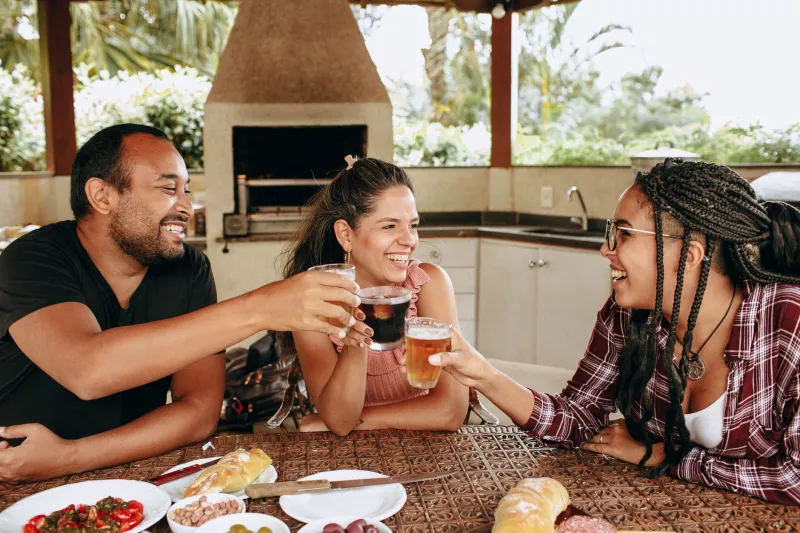
One of the genuinely underappreciated aspects of pub gambling culture is its social dimension. Going to the pokies was rarely a purely solitary activity. You went with someone, or you ended up talking to the person next to you, or you were aware of the ambient community of other players around you — their wins, their reactions, the shared vocabulary of the gaming room.
Online casinos have struggled with this more than any other design challenge. The early internet casino experience was profoundly isolating — just a player, a screen, and a random number generator. The industry has spent the better part of two decades trying to reconstruct the social texture of physical gambling in a digital environment.
Live dealer tables were the first serious attempt. The ability to see a real human, to type a message, to feel like you're in a room with other people — this was genuinely transformative for player retention. More recently, platforms have added community features, leaderboards, shared jackpot trackers, and even social feeds that surface (anonymised) player activity. The goal in every case is the same: make it feel like the pub.
Nostalgia as a Design Philosophy
Here's the uncomfortable question that sits underneath all of this: is familiarity a feature or a manipulation?
The honest answer is that it's both, and the distinction depends almost entirely on the player's awareness of it. A player who consciously enjoys online pokies because they replicate a form of entertainment they've always liked is making a reasonably informed choice. A player who is drawn back to online gambling by sensory cues they don't consciously recognise, in a way that bypasses their rational decision-making, is in a different situation.
Research in behavioural economics suggests that environmental cues — sounds, visual patterns, pacing — can activate habitual behaviour without conscious awareness. This is how a lot of physical pokie addiction works: the venue itself becomes a trigger. When those same cues are replicated online, and made available 24 hours a day on a device that's always within arm's reach, the stakes change.
What Good Design Could Look Like
None of this means that familiar design is inherently predatory. It means that platforms have a responsibility that comes with the power of that familiarity. The same design intelligence that recreates the pub experience can be applied to building in genuine friction — moments where the rhythm breaks, where the player is gently reminded of time and money spent, where the experience doesn't just feel like home but also treats the player like a grown adult who deserves honesty.
The best version of an online casino isn't one that forgets where it came from. It's one that brings the good parts of pub gambling culture — the social warmth, the entertainment value, the casual fun — into a digital space, while leaving behind the parts that caused harm.
The carpet, though, can stay. Some traditions deserve to be honoured.