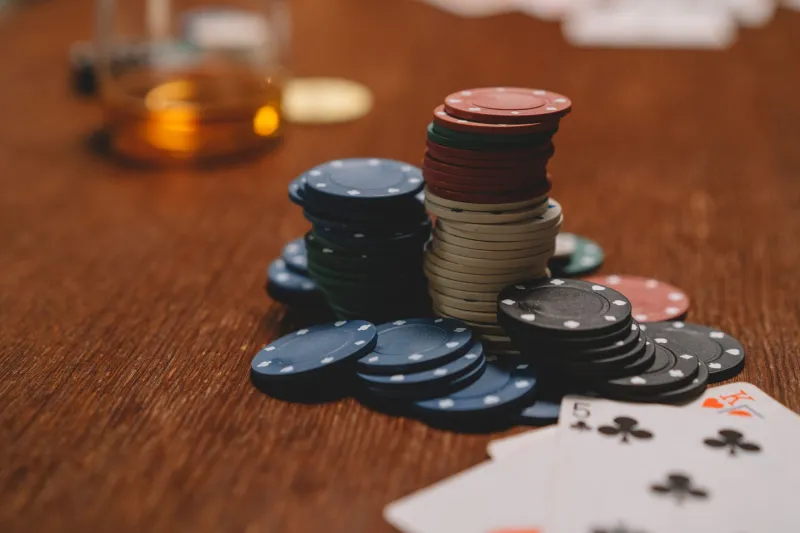
Sharp Eyes, Blind Spots: Why Aussies Can Read a Room but Can't Read Themselves at the Casino

There's a particular kind of Australian genius that doesn't get nearly enough credit. It's the ability to walk into a room — any room — and within thirty seconds, know exactly who's lying, who's nervous, who just had a fight, and who's about to do something they'll regret. We call it reading the room. Behavioural scientists call it social cognition. Your nan just calls it common sense.
Aussies are world-class at it. We've been raised on backyards, barbecues, and the sacred art of the subtle eyebrow raise. We can detect a dodgy story at fifty paces and smell overconfidence like a drop of eucalyptus in a breeze.
And yet. And yet.
The moment we pull up a chair at the digital casino table — or settle in for a late-night session of pokies in our trackies — that legendary perceptiveness evaporates like morning dew on a Darwin footpath. Suddenly, the person we're worst at reading is ourselves.
The Paradox Nobody Wants to Admit
Dr. Simone Hartley, a behavioural psychologist based in Melbourne who has spent years studying gambling cognition, puts it bluntly: "There's a fascinating and deeply frustrating gap between how well people assess others versus how poorly they assess themselves in high-stimulation environments. Casinos — online or otherwise — are specifically designed to exploit that gap."
The mechanics aren't complicated, even if the psychology is. When we're watching someone else, we're naturally objective. We're observers. We notice patterns, inconsistencies, emotional leakage. But when we're the ones in the hot seat — when real money is moving, dopamine is spiking, and the next spin feels like destiny — our brain quietly reassigns itself from "analyst" to "cheerleader."
The jester in all of us wants to believe we're the exception. The one who knows when to stop. The one who's got it under control.
Spoiler: the jester is often wrong.
"I Knew Something Was Off — I Just Didn't Know It Was Me"
Take Marcus, a 34-year-old tradie from Brisbane who agreed to share his story on the condition we didn't use his last name. He describes himself as someone who's always been "good with people" — a natural at picking up on social cues, someone mates come to when they need a straight read on a situation.
"I can tell when someone at work is about to crack before they even open their mouth," he says. "But when I was gambling too much, I genuinely didn't see it. My girlfriend saw it. My brother saw it. I was the last one to figure it out."
He recalls a specific night — three hours into a session, down several hundred dollars — where he felt a distinct, nagging unease. "Something in my gut was saying stop. But I talked myself out of it. I told myself I was just tired, or being negative. I reframed it as doubt instead of a warning."
That reframing? It has a name.
Meet Your Brain's Spin Doctor
Cognitive dissonance is the mental discomfort we feel when our actions conflict with our self-image. For most Aussies, that self-image includes being sensible, self-aware, and not the kind of person who loses control at a casino.
When gambling behaviour starts to drift into problematic territory, the brain doesn't just ignore the warning signs — it actively rewrites them. Losses become "almost wins." Compulsive play becomes "just one more go." The gut feeling that something's wrong gets relabelled as anxiety, tiredness, or bad luck.
"It's not stupidity," Dr. Hartley is quick to clarify. "It's a deeply human survival mechanism. We protect our self-concept at almost any cost. The more intelligent and self-aware someone believes themselves to be, the harder it can actually be for them to accept that they're exhibiting patterns they'd immediately clock in someone else."
In other words, the smarter you think you are, the more elaborate your self-deception can become. The jester builds a funhouse, and then gets lost in it.
Why Online Casinos Make This Worse
Playing online strips away several of the environmental cues that might otherwise trigger self-reflection. There's no mate next to you raising an eyebrow. No bartender quietly suggesting you might want some water. No physical journey home to clear your head.
You're alone with the screen, the sounds, and your own increasingly creative justifications.
Online platforms are also masterfully engineered to keep you in the moment — which is precisely the state least conducive to honest self-assessment. Flashing lights, near-miss mechanics, and the seamless loop of game after game are all designed to shrink your temporal horizon to the next spin, the next hand, the next bet.
Long-term thinking — the kind required for genuine self-reflection — becomes nearly impossible when you're locked in that loop.
The Pub Test You're Not Applying to Yourself
Here's a genuinely useful exercise that several behavioural researchers recommend, and it's very Australian in its simplicity: apply the pub test.
Imagine a mate sitting across from you, describing their last casino session in exactly the terms you'd use to describe yours. Same decisions. Same reasoning. Same results. Would you nod along sympathetically — or would you quietly think, mate, that doesn't sound great?
Most people, when they run this mental experiment honestly, get a very quick answer.
The trouble is that running it honestly requires a moment of stillness that gambling environments — especially online ones — are specifically designed to prevent. The session never really pauses. There's always another game loading.
Reading the Signs Before They Read You
So what actually works? According to Dr. Hartley and other researchers in the space, the most effective interventions aren't about willpower — they're about structure.
Setting hard session limits before you start (not after you're already in the zone) is one of the most evidence-backed strategies available. Writing down your intended stop point — literally, physically writing it — creates a version of accountability that your in-session brain finds harder to override.
Regular check-ins also help. Not the vague "am I okay?" variety, but specific, concrete questions: How long have I been playing? How much have I spent compared to what I planned? How do I actually feel right now — not how do I want to feel?
The goal isn't to become a killjoy. The goal is to apply the same sharp, honest, slightly ruthless social intelligence you'd use on anyone else — to yourself.
The Jester Knows When the Joke's Gone Too Far
At Jokaroom, we're all for fun, entertainment, and the genuine thrill of a great gaming session. The jester energy is real, and it's earned. But the best jesters in history — the ones who lasted — knew something crucial: the joke stops being funny when the person laughing hardest is the house.
Aussies are brilliant at reading people. We just need to occasionally turn that superpower inward.
Your gut feeling is smarter than you're giving it credit for. The next time it whispers something uncomfortable in the middle of a session — don't reframe it. Don't dismiss it. Listen to it the same way you'd listen to a mate who's never steered you wrong.
Because sometimes the sharpest read in the room is the one you take of yourself.
If gambling is causing you concern, Gambling Help Online is available 24/7 at gamblinghelponline.org.au or call 1800 858 858.