Hot Hands and Cold Hard Facts: Why Winning Streaks Turn Aussie Players Into Their Own Worst Enemy
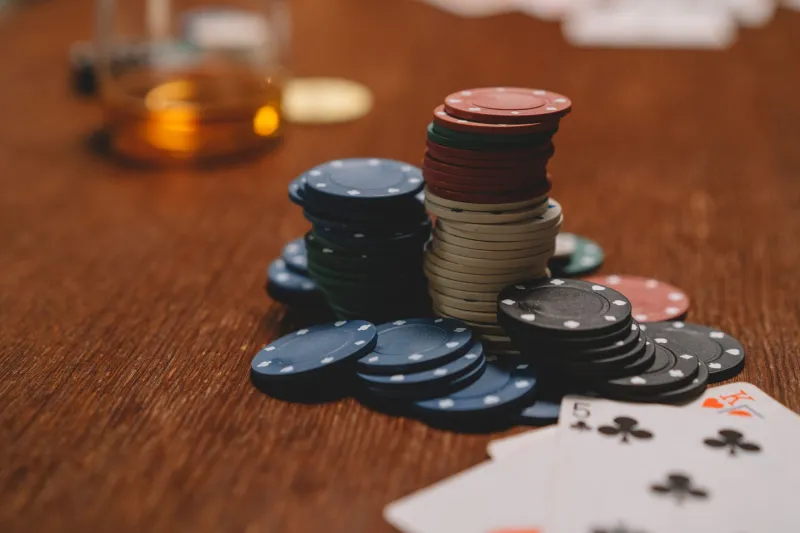
Picture this: you're three rounds deep into a blackjack session, the chips are stacking up, and a little voice in the back of your head whispers, mate, you've cracked it. Maybe it's the cards. Maybe it's the timing. Maybe — and this is the really dangerous one — maybe it's you.
Spoiler: it's not you. But by the time the statistics catch up with your ego, the damage is usually already done.
Welcome to the psychology of the hot hand, one of the most entertaining and expensive cognitive illusions in the Australian punter's repertoire.
What Actually Happens When You Win Four Times in a Row
Let's start with the brain, because that's where the real chaos lives.
Every time you win — whether it's a pokie spin, a well-timed river card, or a roulette number that lands your way — your brain releases a modest hit of dopamine. Win again, and the release is slightly larger. Win a third time, and something shifts. Your prefrontal cortex, the sensible part of your brain responsible for risk assessment and impulse control, starts getting drowned out by the limbic system, which is basically a golden retriever that only cares about the next treat.
Neuroscientists call this momentum bias — a hardwired tendency to perceive patterns in random sequences. Your brain evolved to detect cause and effect, which is enormously useful when you're tracking prey across the Kimberley but genuinely catastrophic when you're sitting in your living room at 11pm convinced a slot machine owes you something.
The result? You start betting bigger. You take risks you'd normally dismiss. You feel, with genuine conviction, that you're operating on a different level to everyone else at the virtual table. You are, in the words of the Jokaroom jester himself, the main character — right up until you're not.
The Gambler's Fallacy's Flashier Cousin
Most Aussies have heard of the gambler's fallacy — the belief that after a run of reds on roulette, black is somehow due. The hot hand fallacy is its equally deluded sibling, operating in the opposite direction: the belief that a winning streak is evidence of skill, momentum, or cosmic alignment.
Both are wrong. Both are expensive.
Here's the statistical reality that no winning streak can change: in games governed by random number generators — and that includes virtually every online casino game you'll play — each outcome is completely independent of every outcome before it. The roulette wheel has no memory. The pokie doesn't know you just won three times. The deck, if shuffled properly, doesn't care about your feelings.
A coin that lands heads ten times in a row has exactly a 50% chance of landing heads on the eleventh flip. The streak is real. The pattern you've inferred from it is fiction.
How Casinos Know You're in the Zone (and What They Do About It)
Here's where it gets genuinely interesting — and a little uncomfortable.
Online casino platforms aren't passive environments. They're meticulously designed psychological ecosystems, and the good ones (the very good ones) know exactly what a player looks like when momentum bias has them in its grip.
Think about what happens visually when you hit a win streak on a quality platform. Animations accelerate. Sounds become more rewarding — richer, more layered. Notification banners appear celebrating your run. Some platforms even surface dynamic messages like "You're on fire!" or "Keep it going!" — language that directly reinforces the illusion of momentum without technically lying about anything.
The UI design does its part too. Bright reward colours, rapid feedback loops, and progress indicators all compress your sense of time and amplify your sense of agency. You feel like you're doing something, making active decisions, steering the ship — when in reality, the outcomes are being generated independently of everything you believe you're controlling.
None of this is accidental. Interface designers study behavioural economics. They know that a player in a perceived hot streak is more likely to increase their bet size, less likely to cash out, and more likely to extend their session. The jester laughs with you — but he's also watching the clock.
The Escalation Trap: Where the Real Money Goes
The most financially damaging consequence of momentum bias isn't the irrationality itself — it's the behavioural escalation it produces.
Research consistently shows that players experiencing winning streaks tend to increase their wager sizes progressively, a pattern sometimes called "pressing your bets." In isolation, this might occasionally work out. Across thousands of sessions, it's a reliable way to hand back your winnings and then some.
The maths is unforgiving. Say you've won five hands at $10 each and you're feeling bulletproof. You bump your next bet to $50 because surely the streak holds. It doesn't. You've now wiped out half your session's gains in a single hand. You bet $75 to recover. You can see where this goes.
The house edge hasn't changed. The RTP hasn't shifted. The only thing that's changed is your risk appetite — and it's changed in exactly the direction the platform's economics want it to.
Staying Sane While Staying in the Game
None of this means winning streaks aren't fun — they absolutely are, and there's nothing wrong with enjoying them. The jester's whole thing is entertainment, after all. The goal is to enjoy the ride without letting the ride drive.
A few practical anchors worth keeping:
Set a ceiling, not just a floor. Most players set loss limits. Fewer set win limits. Decide before you start what a great outcome looks like and commit to walking away when you hit it.
Bet flat, not progressively. Resist the urge to escalate wagers during a hot streak. The streak is not evidence of anything. Flat betting keeps your session sustainable regardless of what narrative your brain is constructing.
Name the feeling. Seriously. When you notice that electric certainty creeping in — that I've cracked it sensation — label it out loud (or in your head): "That's momentum bias. It's not real." Metacognitive awareness is one of the few things that can actually interrupt the limbic system's enthusiasm.
Take the cash-out seriously. That button exists for a reason. Locking in a win isn't weakness. It's the whole point.
The Streak Ends. The Smart Player Doesn't.
Every hot streak ends. That's not pessimism — it's arithmetic. The question is never whether the run will stop but whether you'll have made decisions you're comfortable with by the time it does.
The Jokaroom jester has seen a lot of players ride a hot hand straight into a cold reality. The ones who walk away grinning aren't the ones who won the most — they're the ones who recognised the illusion for what it was, enjoyed it anyway, and got out before it turned on them.
Play smart. Tip your hat to the streak. Then remember it's just a jester pulling strings.