Laugh It Off, Lose It All: How Australia's 'She'll Be Right' Attitude Becomes a Casino's Best Asset
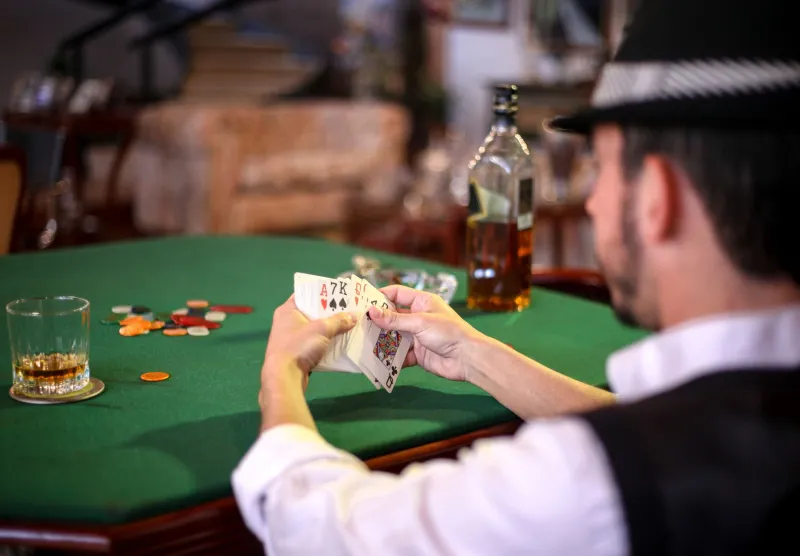
There's a particular kind of Aussie story that gets told at barbecues, in pub beer gardens, and increasingly in online casino chat rooms. It goes something like this: bloke sits down, drops a few hundred bucks, shrugs, cracks a joke about it, orders another snag, and somehow that becomes the funniest story of the night. Everyone laughs. Nobody asks if he's okay.
That story — familiar to virtually every Australian — is not just a cultural quirk. It's a psychological pattern that online casinos understand better than most of us are comfortable admitting.
The Comedy of Catastrophe
Australia has a genuinely unusual relationship with failure. Where other cultures might treat financial loss as something to be hidden or mourned privately, many Australians wear it as a badge of larrikin honour. The ability to make your mates laugh about your own misfortune isn't just socially acceptable here — it's practically admired.
Behavioural psychologists call this "humour-based coping," and in moderation, it's actually healthy. The problem is that when it's applied to gambling losses, it functions as a very effective suppressor of the kind of self-reflection that might otherwise prompt someone to stop, reassess, and walk away.
When you turn a $400 loss into a punchline, you've done something clever: you've converted a negative emotional signal into a social reward. Your mates laugh, you feel good, and the feedback loop that should be telling your brain "this was a bad decision" gets completely short-circuited.
Casinos — particularly the online variety — are acutely aware of this dynamic.
What "She'll Be Right" Actually Costs
The phrase "she'll be right" is so embedded in Australian vernacular that it barely registers anymore. It's a cultural shorthand for optimism, resilience, and a kind of cheerful fatalism that's genuinely endearing in many contexts. Missed the bus? She'll be right. Forgot sunscreen at the beach? She'll be right. Down three hundred bucks on the pokies with rent due Friday?
You can see where this is heading.
The "she'll be right" mentality, applied to gambling, translates into a specific and well-documented betting pattern: the tendency to continue playing after losses rather than stopping to evaluate whether continuing is rational. It's not quite the same as the gambler's fallacy (the belief that a win is "due"). It's something more distinctly Australian — a kind of breezy confidence that things will sort themselves out, combined with a reluctance to appear rattled or overly serious about money.
Research into problem gambling in Australia consistently finds that local players are less likely than their international counterparts to self-identify as having a problem, even when their behaviour objectively meets clinical thresholds. Part of this is stigma. But part of it is genuinely cultural — the "she'll be right" filter is so automatic that many players never actually process the signal that something has gone wrong.
The Casino Knows Your Sense of Humour
Here's where it gets a little uncomfortable.
The branding, UX design, and communication strategies used by many online casinos — including the jester-themed, entertainment-forward presentation that sites like Jokaroom lean into — aren't accidental. Humour, irreverence, and a light-touch attitude toward money are baked into the aesthetic because they work. They work especially well in Australia.
When a platform presents gambling as a laugh, as entertainment, as something not to be taken too seriously, it's doing something quite specific: it's pre-emptively framing any losses as part of the fun. If the whole thing is a joke, then losing is just the punchline. And Australians, trained from birth to appreciate a good punchline, are primed to accept that framing without question.
This isn't a conspiracy. It's just good marketing that happens to align very neatly with a cultural vulnerability.
Player forums and community spaces are full of this dynamic in action. Someone posts about a rough session — maybe they've lost more than they intended — and within minutes the thread is full of laughing emojis, commiserating jokes, and light-hearted suggestions to "just spin one more time, mate." The social environment actively discourages serious reflection. Raising genuine concern in that context feels like a buzzkill. Nobody wants to be the person who makes it weird.
Real Patterns, Real People
Talk to anyone who works in gambling support services in Australia and they'll tell you the same thing: the hardest clients to reach are often not the ones in obvious distress. They're the cheerful ones. The blokes who walk into a support session with a joke ready, who describe catastrophic financial decisions with the comic timing of a stand-up routine, who seem completely fine right up until they absolutely aren't.
The self-deprecating humour isn't a mask, exactly — it's more like a full-body suit of armour that happens to be made of laughter. It keeps the difficult emotions at a very comfortable distance. And because Australian culture rewards that kind of stoic comedy, there's very little social pressure to take it off.
One financial counsellor working with gambling-affected clients described it this way: "The ones who joke about it are often the ones who've been doing it the longest. They've had years of practice turning the losses into stories. By the time they're in front of me, the stories are very polished."
So What Do You Actually Do About It?
This isn't an article designed to make Australians stop being funny — that would be both futile and frankly a national tragedy. The goal is something more specific: creating a small gap between the impulse to laugh something off and the decision about whether to actually do anything about it.
A few practical nudges worth considering:
Name the pattern. Next time you find yourself turning a loss into a story for your mates, pause for a second before the performance begins. Ask yourself: is this genuinely fine, or am I converting a real feeling into entertainment?
Set hard limits before you sit down. The "she'll be right" mentality is most dangerous when it's applied during a session. If you've already decided — clearly, before you start — what you're prepared to lose, the breezy optimism doesn't get a chance to override rational decision-making.
Take the chat room with a grain of salt. Online casino communities can be genuinely fun and social. They can also be echo chambers where risky behaviour gets normalised through humour. Knowing the difference is worth something.
Call the number. Gambling Help Online is 1800 858 858. It's free, it's confidential, and the people on the other end have heard every funny story. They're not there to take away your sense of humour. They're there for when the jokes stop working.
The Jester's Real Job
Here at Jokaroom, we lean into the jester thing pretty hard — and we're not going to pretend otherwise. But the best jesters in history weren't just clowns. They were the ones who could say the uncomfortable truth in a way that people could actually hear it.
So here's the uncomfortable truth, delivered with as much goodwill as we can muster: Australia's gift for laughing through adversity is genuinely wonderful. It's also, in the specific context of gambling, one of the most effective ways to stay stuck in a pattern that isn't serving you.
She'll be right is a great attitude for a flat tyre on the highway. It's a lousy strategy for your bankroll.
Know the difference. Then laugh about it, if you want. We'll be here.