So Close, Yet So Broke: The Neuroscience of Near-Misses and Why Aussie Gamblers Keep Falling for Them
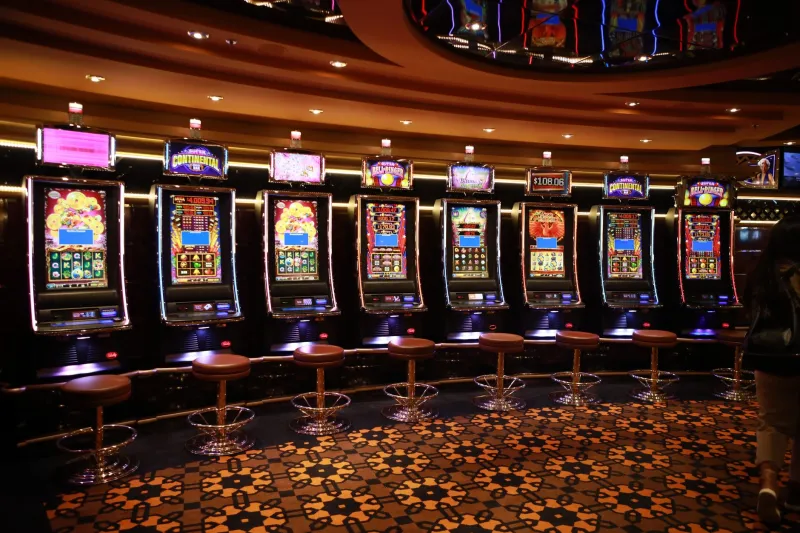
Picture this: you're mid-spin on your favourite online pokie, the first reel locks on a glittering jackpot symbol, the second one follows suit, and then — clunk — the third reel taunts you with a symbol that's one position off the prize. Your heart does something weird. Not quite devastation. Not quite relief. Something in between that somehow makes you want to hit spin again immediately.
Congratulations. You've just been played by one of the most elegant psychological traps in modern game design. And if you're Australian, statistically speaking, you're more likely to fall for it than almost anyone else on the planet.
Welcome to the near-miss phenomenon — the casino industry's most profitable trick that technically isn't even a win.
Your Brain Doesn't Know the Difference (And That's the Whole Point)
Here's the uncomfortable truth that neuroscientists have been shouting into the void for decades: when you nearly win, your brain lights up in almost exactly the same way as when you actually win.
Research from the University of Cambridge found that near-misses activate the same dopaminergic reward pathways as genuine victories. Your nucleus accumbens — the part of your brain responsible for motivation and reward — doesn't particularly care whether those reels actually lined up. The almost is enough to trigger a surge of dopamine, that feel-good chemical that keeps you coming back for more.
In practical terms, this means a near-miss doesn't feel like a loss. It feels like encouragement. Like the machine is whispering, "You were so close, mate. One more go."
And here's the kicker: that encouragement is completely manufactured.
The Engineers in the Room You Never See
Modern online pokies — and yes, that includes the ones you're spinning at 11pm in your trackies — are not products of chance in the way most players imagine. They are meticulously engineered experiences built by teams of game designers, behavioural psychologists, and mathematicians whose entire job is to maximise what the industry calls "time on device."
Near-misses are baked into the code. Regulatory frameworks in Australia require that the outcome of each spin is determined by a certified Random Number Generator (RNG), meaning the result is genuinely random at the moment it's calculated. However — and this is where it gets interesting — game designers can control how symbols are distributed across the reels. High-value jackpot symbols can be programmed to appear more frequently on the first and second reels than the third, creating a statistically higher rate of near-misses than pure chance would produce.
The result? You see those jackpot symbols teasing you far more often than you'd ever actually land them. The machine is technically honest. It's just architecturally manipulative.
Why Australians Might Be Especially Susceptible
Australia has one of the highest gambling participation rates in the world. We punt on the footy, the horses, the pokies at the local, and increasingly on online platforms from the couch. This cultural familiarity with gambling isn't just a fun fact — it has real implications for how we respond to near-misses.
Researchers studying problem gambling patterns have found that experienced gamblers are more susceptible to near-miss effects, not less. The logic seems counterintuitive until you understand that familiarity breeds emotional investment. The more you've played, the more your brain has been conditioned to read near-misses as meaningful signals rather than statistical noise.
In other words: the longer you've been punting, the harder it is to shrug off that almost-jackpot and walk away.
Combine that with Australia's deeply embedded "have a crack" cultural attitude and you've got a population that's practically primed to hear "almost" as "try again."
The Numbers Behind the Near-Miss Trap
Let's talk money, because that's ultimately what this is about.
Studies tracking player behaviour in real casino environments have consistently shown that players who experience near-misses bet more on subsequent spins, play for longer sessions overall, and rate their gambling experiences more positively — even when they're losing money. One landmark study published in the journal Addiction found that near-misses increased the urge to gamble in both recreational players and problem gamblers, with problem gamblers showing significantly stronger responses.
For the casinos, this translates directly to revenue. A game engineered to deliver frequent near-misses doesn't just keep you spinning longer — it keeps you happier about losing. Which is, when you say it out loud, genuinely extraordinary.
The near-miss isn't a consolation prize. It's a retention mechanism dressed up as bad luck.
How to Catch Yourself Before the Almost Gets You
None of this means you can't enjoy online pokies. But it does mean you need to play with your eyes open — or more accurately, with your brain open.
A few practical strategies that actually work:
Set a session budget before you start, not after the near-miss. The moment after an almost-win is the worst possible time to make financial decisions. Your dopamine levels are spiking and your prefrontal cortex — responsible for rational thinking — is effectively being overruled by your reward circuitry. Decide your limit when you're calm, and honour it.
Recognise the near-miss for what it is: a loss. It sounds obvious, but actively reminding yourself that "close" doesn't count in pokies can interrupt the automatic emotional response. Two jackpot symbols and a miss is not a sign you're "due" — it's just a loss with good staging.
Track time, not just money. Near-misses are particularly effective at distorting your sense of time. What feels like twenty minutes can easily be an hour. Use a timer. Seriously.
Take breaks between sessions. The near-miss effect compounds over a continuous session. Stepping away — even for ten minutes — gives your brain a chance to reset rather than spiral.
The Jester's Honest Take
Here at Jokaroom, we're all about the fun. The spin, the suspense, the moment when everything lines up and the confetti (metaphorical or otherwise) starts flying. But part of being a smart player in Australia's wildest casino playground is understanding the game behind the game.
Near-misses are not bad luck. They're not omens. They're not the universe nudging you towards a jackpot that's finally ready to drop. They are deliberate, scientifically-informed design choices intended to keep you playing.
The jester's trick only works when the audience doesn't know it's a trick. Now you do.
Spin smart, know when the curtain's being pulled, and never let an almost convince you that broke is just one spin away from brilliant.